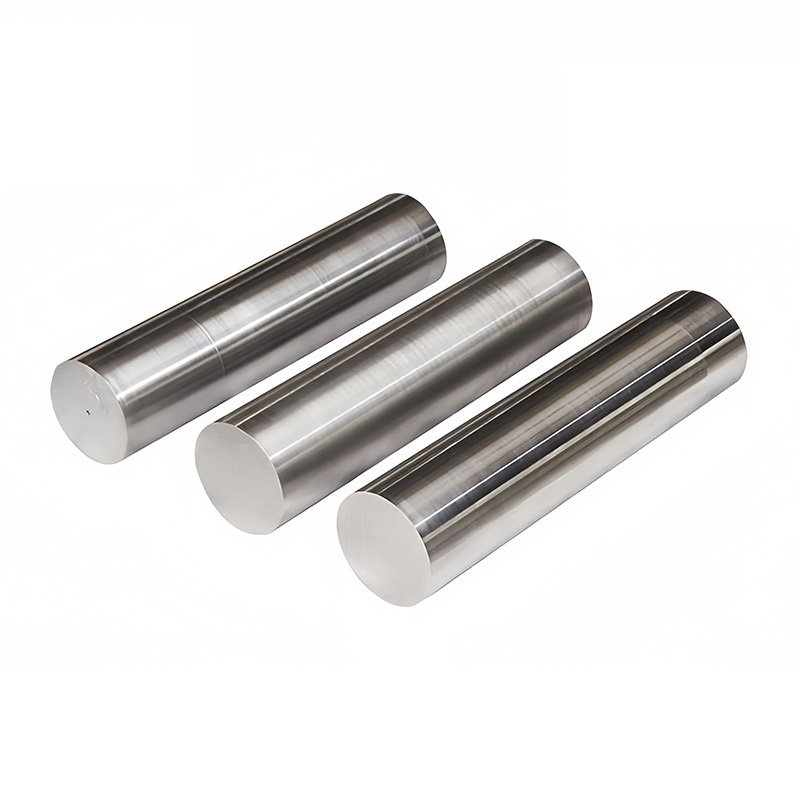
Alloy C276
| Chemical Composition | ||||||||||||
| Weight% | C | P | Si | Ni | Co | W | Mn | S | Cr | Mo | V | Fe |
| C276 | 0.01 max | 0.040 max | 0.08 max | Bal | 2.5 max | 3-4.5 | 1.00 max | 0.030 max | 14.5-16.5 | 15-17 | 0.35 max | 4-7 |
Typical Mechanical Properties
| Material | Ultimate Tensile (min) | Yield Strength (Min) | Elongation % | Hardness RB | ||
| KSI | MPa | KSI | MPa | |||
| C276 Tube | 105.4 | 727 | 45.4 | 313 | 70 | 92 |
| C276 Plate | 107.4 | 741 | 50.3 | 347 | 67 | 89 |
| C276 Bar | 110.0 | 758 | 52.6 | 363 | 62 | 88 |
| C276 Sheet | 115.5 | 796 | 54.6 | 376 | 60 | 86 |
Corrosion Resistance
INCONEL alloy C-276 is resistant to general corrosion, stress-corrosion cracking, pitting, and crevice corrosion in a broad range of severe environments. Its resistance to carbide precipitation during welding maintains corrosion resistance in the heat-affected zones of welded joints. It has exceptional resistance to sulfuric acid and hydrochloric acid. It resists many of the most severe media encountered in chemical processing, including reducing and oxidizing acids, highly oxidizing, neutral, and acid chlorides, solvents, formic and acetic acids, acetic anhydride, wet chlorine gas, hypochlorites, and chlorine solutions. It has excellent resistance to phosphoric acid. At all temperatures below the boiling point and at concentrations lower than 65 wt %, tests have shown corrosion rates of less than 5 mpy (0.13 mm/y). INCONEL alloy C-276 exhibits excellent resistance to corrosion by seawater especially under crevice conditions which induce attack in other commonly used materials such as 316 stainless steel, MONEL® alloy 400, and INCONEL alloy 625. See Special Metals publication SMC-026, “Resistance to Aqueous Corrosion” on the website www.specialmetals.com, for more corrosion data.
Flue Gas Desulfurization: INCONEL alloy C-276 is useful for flue gas desulfurization (FGD) systems to control air pollution from electric power plants. The alloy is used for various applications including scrubbers, ducting and stack liners. Scrubber liquors and gas condensates generally contain chlorides and the chloride level often determines the corrosion behavior of the materials. INCONEL alloy C276 has been shown to withstand higher chloride content than other alloys before the onset of localized corrosion in a simulated scrubber environment.
Oilfield Applications: INCONEL alloy C-276 is one of the premier materials for recovery and handling of “sour” natural gas, which contains hydrogen sulfide and usually carbon dioxide and chlorides. The gas can be extremely corrosive to carbon and alloy steels and may cause the brittle failure of many alloys by sulfide stress cracking (hydrogen embrittlement) or stress-corrosion cracking. The high levels of nickel, chromium, and molybdenum in INCONEL alloy C-276 make the alloy resistant to sour environments even at high temperatures in deep wells. The alloy is used for tubing and a variety of other downhole and surface components.
Available Products and Specifications
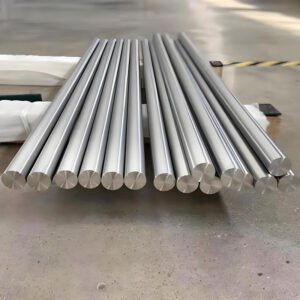
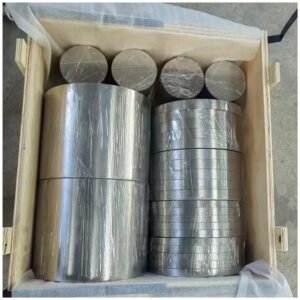
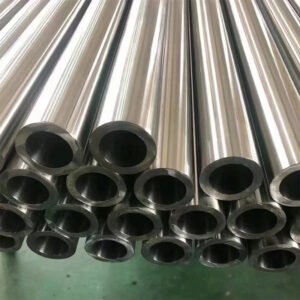
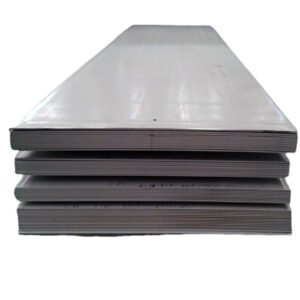
INCONEL alloy C-276 is designated as UNS N10276 and Werkstoff Nr. 2.4819. It is listed in NACE MR0175 for oil and gas service. Alloy C-276 is available as pipe, tube, sheet, strip, plate, round bar, flat bar, forging stock, hexagon and wire. INCONEL alloy C-276 is approved as a material of construction by the ASME Boiler and Pressure Vessel Code. Allowable stresses for Section III construction up to 800°F, Section VIII, Division 1 construction up to 1250°F, and Section VIII, Division 2 construction up to 800°F are contained in Tables 1B and 2B of ASME Code Case Section II, Part D.
Rod, Bar, Wire and Forging Stock – ASTM B 462 (Rod, Bar and Forging Stock), ASTM B 564 & ASME SB 564 (Forgings), ASTM B 574 & ASME SB 574 (Rod, Bar and Wire), ISO 9723 (Rod and Bar), ISO 9724 (Wire), ISO 9725 (Forgings), DIN 17752, DIN 17753, DIN 17754, VdTÜV 400/12.98
Plate, Sheet and Strip – ASTM B 575/B 906 & ASME SB 575/SB 906, ISO 6208, DIN 17750, VdTÜV 400/12.98
Pipe and Tube – ASTM B 622/B 829 & ASME SB 622/SB 829 (Seamless Tube), ASTM B 626/B 751 & ASME SB 626/SB 751 (Welded Tube), ASTM B 619/B 775 & ASME SB 619/SB 775 (Welded Pipe), ISO 6207 (Seamless Tube), DIN 17751, VdTÜV 400/12.98
Welding Products – INCONEL Filler Metal C-276 – AWS A5.14 / ERNiCrMo-4, INCONEL Welding Electrode C-276 – AWS A5.11 / ENiCrMo-4 Others – ASTM B 366 & ASME SB 366 (Fittings), DIN 17744 (chemical composition)