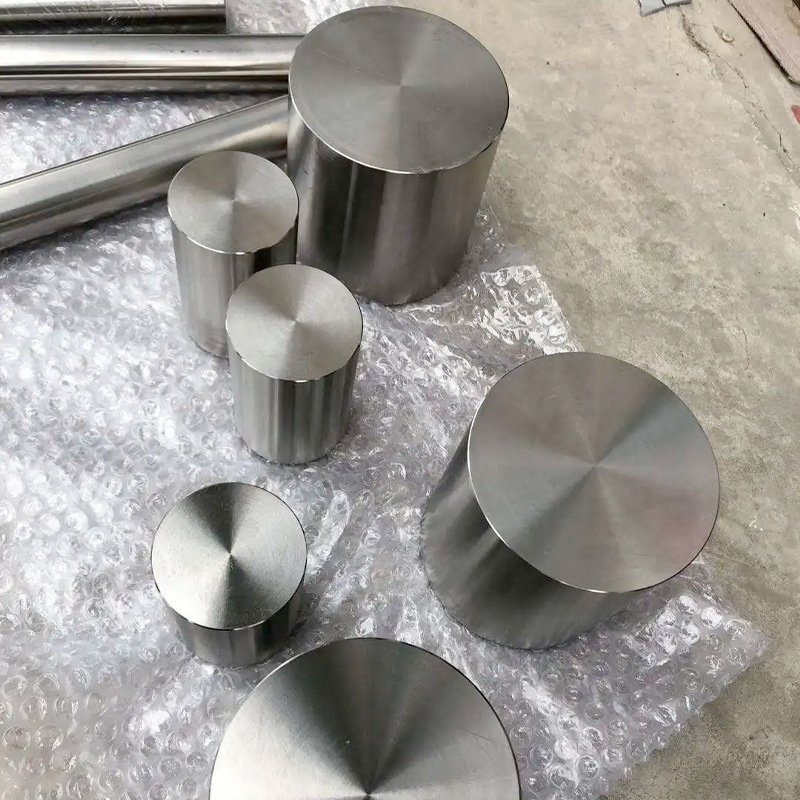
Nickel Alloy 625
The properties of INCONEL alloy 625 that make it an excellent choice for sea-water applications are freedom from local attack (pitting and crevice corrosion), high corrosion-fatigue strength, high tensile strength, and resistance to chloride-ion stress-corrosion cracking. It is used as wire rope for mooring cables, propeller blades for motor patrol gunboats, submarine auxiliary propulsion motors, submarine quick-disconnect fittings, exhaust ducts for Navy utility boats, sheathing for undersea communication cables, submarine transducer controls, and steam-line bellows. Potential applications are springs, seals, bellows for submerged controls, electrical cable connectors, fasteners, flexure devices, and oceanographic instrument components.
High tensile, creep, and rupture strength; outstanding fatigue and thermal-fatigue strength; oxidation resistance; and excellent weldability and brazeability are the properties of INCONEL alloy 625 that make it interesting to the aerospace field. It is being used in such applications as aircraft ducting systems, engine exhaust systems, thrust-reverser systems, resistance welded honeycomb structures for housing engine controls, fuel and hydraulic line tubing, spray bars, bellows, turbine shroud rings, and heat-exchanger tubing in environmental control systems. It is also suitable for combustion system transition liners, turbine seals, compressor vanes, and thrust-chamber tubing for the rocket.
The outstanding and versatile corrosion resistance of INCONEL alloy 625 under a wide range of temperatures and pressures is a primary reason for its wide acceptance in the chemical processing field. Because of its ease of fabrication, it is made into a variety of components for plant equipment. Its high strength enables it to be used, for example, in thinner-walled vessels or tubing than possible with other materials, thus improving heat transfer and saving weight. Some applications requiring the combination of strength and corrosion resistance offered by INCONEL alloy 625 are bubble caps, tubing, reaction vessels, distillation columns, heat exchangers, transfer piping, and valves.
In the nuclear field, INCONEL alloy 625 may be used for reactor-core and control-rod components in nuclear water reactors. The material can be selected because of its high strength, excellent uniform corrosion resistance, resistance to stress cracking and excellent pitting resistance in 500°-600°F (260-316°C) water. Alloy 625 is also being considered in advanced reactor concepts because of its high allowable design strength at elevated temperatures, especially between 1200°-1400°F (649-760°C).
The properties are given in this bulletin, results of extensive testing, are typical of the alloy but should not be used for specification purposes. Applicable specifications appear in the last section of this publication.
Alloy 625 (UNS N06625/W.Nr. 2.4856) Chemical Composition
| Weight % | Ni | Cr | Mo | Nb + Ta | Fe | Ti | C | Mn | Si | S | P | Al | Co |
| Alloy 625 | 58.0 min | 20 – 23 | 8 -10 | 3.15 -4.15 | 5.0 max | 0.40 max | 0.10 max | 0.50 max | 0.50 max | 0.15 max | 0.15 max | 0.40 max | 1.0 max |
Alloy 625 (UNS N06625/W.Nr. 2.4856) Mechanical Properties
| Material Form and Condition | Tensile Strength MPa | Yield Strength (0.2% Offset) MPa | Elongation 4D(%) | Hardness HB | |||
| Ksi | MPa | Ksi | MPa | ||||
| Alloy 625 Bar | Annealed | 120 | 827 | 60 | 414 | 30 | ≤ 287 HB |
| Alloy 625 Sheet | Annealed | 120 | 827 | 60 | 414 | 30 | 145-240 |
| Alloy 625 Tube Seamless and Welded |
Annealed | 120 | 827 | 60 | 414 | 35 | – |
Available Products and Specifications
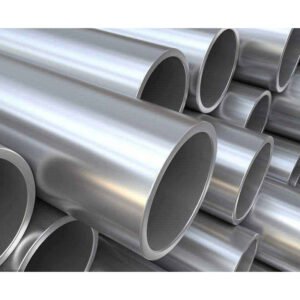
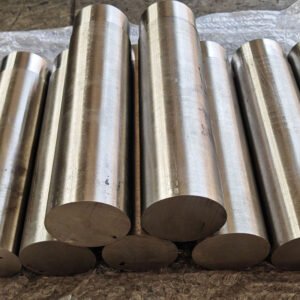
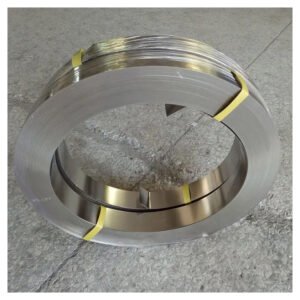
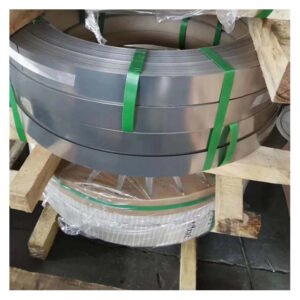
INCONEL alloy is designated as UNS N06625, Werkstoff Number 2.4856 and ISO NW6625 and is listed in NACE MR-01-75. It is available in all standard mill forms including rod, bar, wire, and wire rod, plate, sheet, strip, shapes, tubular products, and forging stock.
Rod, Bar, Wire and Forging Stock – ASTM B 446/ASME SB 446 (Rod & Bar), ASTM B 564/ASME SB 564 (Forgings), SAE/AMS 5666 (Bar, Forgings, & Rings), SAE/AMS 5837 (Wire), ISO 9723 (Rod & Bar), ISO 9724 (Wire), ISO 9725 (Forgings), VdTÜV 499 (Rod & Bar), BS 3076NA21 (Rod & Bar), EN 10095 (Rod, Bar, & Sections), DIN 17752 (Rod & Bar), ASME Code Case 1935 (Rod, Bar, & Forgings), DIN 17754 (forgings), DIN 17753 (Wire).
Plate, Sheet and Strip – ASTM B 443/ASTM SB 443 (Plate, Sheet & Strip), SAE/AMS 5599 & 5869 & MAM 5599 (Plate, Sheet & Strip), ISO 6208 (Plate, Sheet & Strip), VdTÜV 499 (Plate, Sheet & Strip), BS 3072NA21 (Plate & Sheet), EN 10095 (Plate, Sheet & Strip), DIN 17750 (Plate, Sheet & Strip), ASME Code Case 1935.
Pipe & Tube – ASTM B 444/B 829 & ASME SB 444/SB 829 (Seamless Pipe & Tube), ASTM B704/B 751 & ASME SB 704/SB 751 (Welded Tube), ASTM B705/B 775 & ASME SB 705/SB 775 (Welded Pipe), ISO 6207 (Tube), SAE/AMS 5581 (Seamless & Welded Tube), VdTÜV 499 (Tube), BS 3074NA21 (Seamless Pipe & Tube), DIN 17751 (Tube), ASME Code Case 1935.
Other Product Forms – ASTM B 366/ASME SB 366 (Fittings), ISO 4955A (Heat Resisting Steels & Alloys), DIN 17744 (Chemical composition of all product forms).