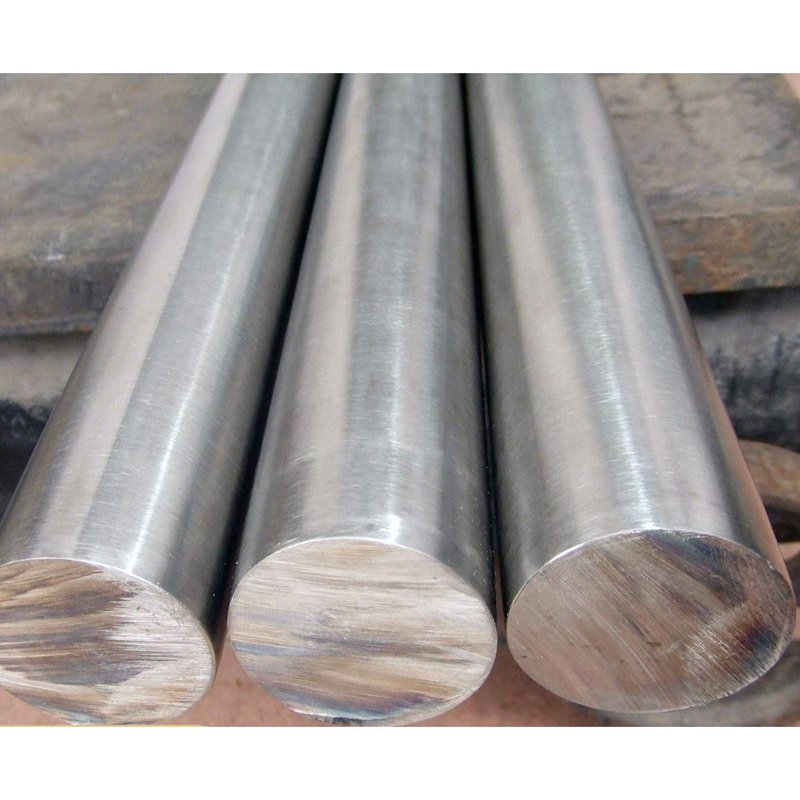
Nickel Alloy 200
Nickel 200 (UNS N02200/W.Nr. 2.4060 & 2.4066) Limiting Chemical Composition, (%) by Weight:
| Nickel (plus Cobalt) | 99.0 min |
| Copper | 0.25 max |
| Iron | 0.40 max |
| Manganese | 0.35 max |
| Carbon | 0.15 max |
| Silicon | 0.35 max |
| Sulfur | 0.01 max |
Available Products and Specifications
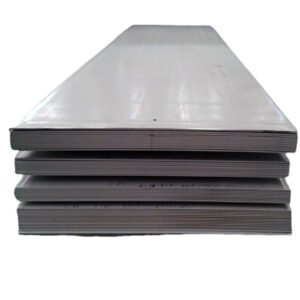
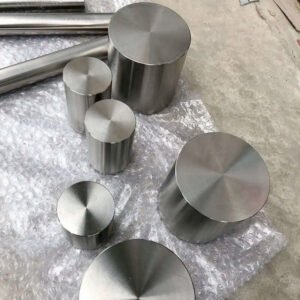
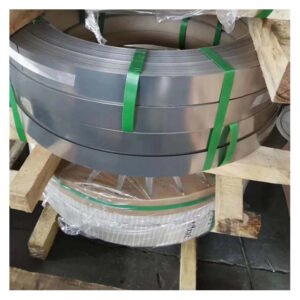
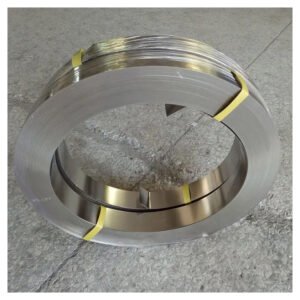
Standard product forms are pipe, tube, sheet, strip, plate, round bar, flat bar, forging stock, hexagon and wire. The products are available in a wide range of sizes.
Nickel 200 is designated as UNS N02200 and Werkstoff Numbers 2.4060 and 2.4066.
Specifications for Nickel 200 include the following:
Rod and Bar: ASTM B 160/ ASME SB 160, DIN 17752, ISO 9723
Pipe and Tube: ASTM B 161/ ASME SB161, B 163/ SB 163, B 725/ SB 725, B730/ SB 730, B 751/ SB 751, B775/ SB 775, B 829/ SB 829, DIN 17751, ISO 6207
Plate, Sheet & Strip: ASTM B 162/ ASME SB 162, DIN 17750, ISO 6208
Fittings: ASTM B 366/ ASME SB 366 Forgings ASTM B 564/ ASME SB 564, ISO 9725, DIN 17754
Chemical Composition: DIN 17740
Wire: DIN 17753, ISO 9724
High-temperature properties
The mechanical properties of Nickel 200 at elevated temperatures are shown in Figures 3 and 4. However, Nickel 200 is normally limited to service at temperatures below 600°F (315°C). At higher temperatures, Nickel 200 products can suffer from graphitization which can result in severely compromised properties. For service above 600°F (315°C), Nickel 201 is preferred. Nickel 200 and 201 are approved for the construction of pressure vessels and components under ASME Boiler and Pressure Vessel Code Section VIII, Division 1. Nickel 200 is approved for service up to 600°F (315°C) while Nickel 201 is approved for service up to 1250°F (677°C).
Metallography
Nickel 200 is a solid-solution alloy with a face-centered cubic structure. The microstructure typically exhibits a minor amount of nonmetallic inclusions, principally oxides, which are unchanged by annealing. Prolonged exposure in the temperature range of 800°- 1200°F (425°-650°C) will precipitate graphite. (See Figure 9.) For this reason, the alloy is not recommended for service in the 600°-1200°F (315°-650°C) range. Nickel 201 is used instead.
Corrosion Resistance
Nickel 200 is highly resistant to many corrosive media. Although most useful in reducing environments, it can be used also under oxidizing conditions that cause the development of a passive oxide film. The outstanding resistance of Nickel 200 to caustics is based on this type of protection. In all environments, when temperatures above 600°F (315°C) are involved, the preferred material is Nickel 201.
Atmosphere
Nickel 200 normally remains bright in indoor atmospheres. Outdoors, the rate of attack is slow because of the formation of a thin protective film, usually a sulfate. This rate increases with increases in the sulfur dioxide content of the atmosphere (such as might occur in industrial areas). Corrosion rates in both marine and rural atmospheres are very low.