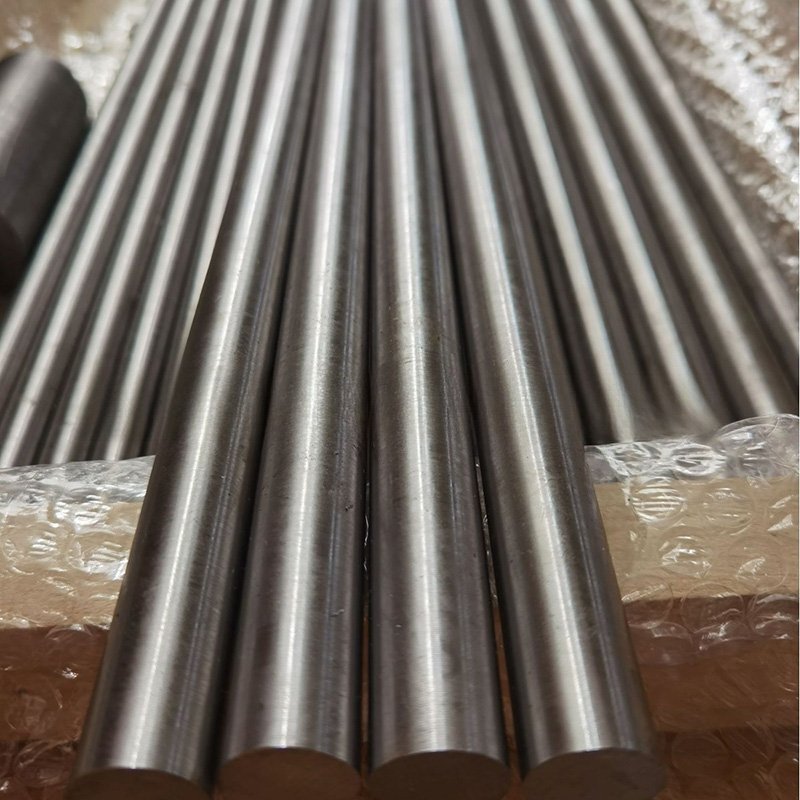
Nickel Alloy 600
The alloy is used extensively in the chemical industry for its strength and corrosion resistance. Applications include heaters, stills, bubble towers and condensers for processing of fatty acids; evaporator tubes, tube sheets and flaking trays for the manufacture of sodium sulfide; and equipment for handling abietic acid in the manufacture of paper pulp.
The alloy’s strength and oxidation resistance at high temperatures make it useful for many applications in the heat-treating industry. It is used for retorts, muffles, roller hearths and other furnace components and for heat-treating baskets and trays.
In the aeronautical field, INCONEL alloy 600 is used for a variety of engine and airframe components that must withstand high temperatures. Examples are lock wire, exhaust liners and turbine seals.
INCONEL alloy 600 is used in the electronic field for such parts as cathode-ray tube spiders, thyratron grids, tube support members and springs.
The alloy is a standard material of construction for nuclear reactors. It has excellent resistance to corrosion by high-purity water, and no indication of chloride-ion stress-corrosion cracking in reactor water systems has been detected. For nuclear applications, the alloy is produced to exacting specifications and is designated INCONEL alloy 600T.
| Nickel Alloy 600 Chemical Composition | ||||||||
| Weight% | C | S | Cr | Cu | Mn | Si | Ni | Fe |
| Nickel Alloy 600 | 0.15 max | 0.015 max | 14.0 – 17.0 | 0.50 max | 1.0 max | 0.50 max | 72.0 min | 6 – 10 |
Nickel Alloy 600 Mechanical Properties
| Material Form and Condition | Tensile Strength | Yield Strength | Elongation % | Hardness,
Rockwell |
|||
| KSI | MPa | KSI | MPa | ||||
| Alloy 600 rod and bar | Cold drawn Annealed | 80-100 | 550-690 | 25-50 | 170-345 | 55-35 | 65-85B |
| Alloy 600 Plate | Hot rolled Annealed | 80-100 | 550-725 | 30-50 | 205-345 | 55-35 | 65-85B |
| Alloy 600 Sheet | Cold Rolled Annealed | 80-100 | 550-690 | 30-45 | 205-310 | 55-35 | 88B max |
| Alloy 600 Tube and Pipe | Cold Drawn Annealed | 80-100 | 550-690 | 25-50 | 170-345 | 55-35 | 88B max |
| Alloy 600 Wire | Cold Drawn Annealed | 80-120 | 550-830 | 35-75 | 240-520 | 45-20 | – |
| Alloy 600 Wire | Cold Drawn No 1 Temper | 105-135 | 725-930 | 70-105 | 480-725 | 35-15 | – |
| Alloy 600 Wire | Spring Temper | 170-220 | 1170-1520 | 150-210 | 1035-1450 | 5-2 | – |
Corrosion Resistance
The composition of INCONEL alloy 600 enables it to resist a variety of corrosives. The chromium content of the alloy makes it superior to commercially pure nickel under oxidizing conditions, and its high nickel content enables it to retain considerable resistance under reducing conditions. The nickel content also provides excellent resistance to alkaline solutions. The alloy has fair resistance to strongly oxidizing acid solutions. However, the oxidizing effect of dissolved air alone is not sufficient to ensure complete passivity and freedom from attack by air-saturated mineral acids and certain concentrated organic acids
Available products and specifications
INCONEL alloy 600 is designated as UNS N06600 and Werkstoff Number 2.4816. The alloy is approved under the Boiler and Pressure Vessel Code of the American Society of Mechanical Engineers. It is approved under Section I (Power Boilers), Section III (Nuclear Vessels), and Section VIII (Pressure Vessels). Allowable design stresses are found in Section II, Part D. Section I coverage is provided by Code Case 1827.
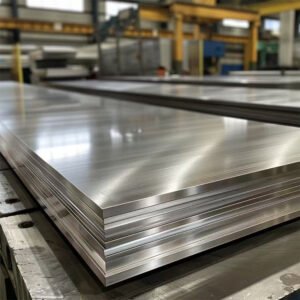
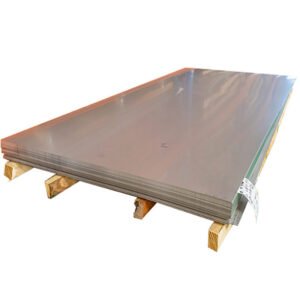
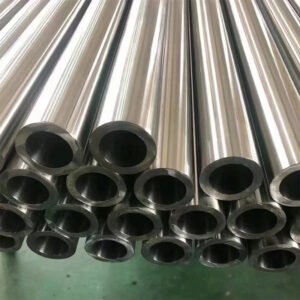
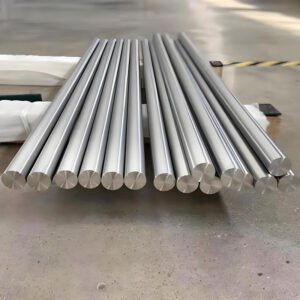
Standard product forms are pipe, tube, sheet, strip, plate, round bar, flat bar, forging stock, hexagon, wire, and extruded section. The products are available in a wide range of sizes.
Rod, Bar, Wire and Forging Stock – ASTM B 166/ASME SB 166, ASTM B 564/ASME SB 564, ASME Code Cases 1827 and N-253, SAE/AMS 5665 and 5687, BS 3075NA14 and 3076NA14, DIN 17752, 17753 and 17754, ISO 9723, 9724, and 9725, MIL-DTL-23229, QQ-W-390.
Plate, Sheet and Strip – ASTM B 168/ASME SB 168, ASTM B 906/ASME SB 906, ASME Code Cases 1827 and N-253, SAE/AMS 5540, BS 3072NA14 and 3073NA14, DIN 17750, ISO 6208, EN 10095, MIL-DTL-23228.
Pipe and Tube – ASTM B 167/ASME SB 167, ASTM B 163/ASME SB 163, ASTM B 516/ASME SB 516, ASTM B 517/ASME SB 517, ASTM B 751/ASME SB 751, ASTM B 775/ASME SB 775, ASTM B 829/ASME SB 829, ASME Code Cases 1827, N-20, N-253, and N-576, SAE/AMS 5580, DIN 17751, ISO 6207, MIL-DTL-23227
Other – ASTM B 366/ASME SB 366, DIN 17742, ISO 4955A, AFNOR NC15Fe